 blog
blog
Commercial Litigation Attorney Services in Mississippi
Table of Contents
- What Commercial Litigation Attorney Services Cover in Mississippi
- Breach of Contract Elements in Mississippi: What Must Be Proven
- Mississippi Rules of Civil Procedure in Commercial Litigation
- Business Dispute Resolution Strategies: Mediation, Arbitration, and Settlement
- Pre-Litigation Risk Assessment and Litigation Cost Management
- Digital Evidence and E-Discovery in Complex Business Litigation
- Choosing Commercial Litigation Attorney Services in Mississippi
- Frequently Asked Questions
Last Updated: September 13, 2026
What Commercial Litigation Attorney Services Cover in Mississippi
Commercial litigation is the practice of resolving disputes that arise from business relationships, contracts, and corporate conduct through the court system or structured negotiation. Holcomb Law Group handles these matters for business owners across Mississippi and Tennessee, and the work typically falls into a handful of recognizable categories.
The scope is wider than most people expect. A single commercial litigation attorney services Mississippi engagement can touch contract enforcement, fiduciary duty claims, shareholder disputes, and injunctive relief, sometimes all at once.
Here is the practical breakdown of what these services actually cover.
Breach of Contract and Contract Enforcement
Breach of contract is a failure to perform a contractual obligation without a legally recognized excuse. Most commercial disputes in Mississippi begin here, whether the contract involves goods, services, real estate, or employment terms.
Contract enforcement matters range from a vendor who never delivered to a partner who walked away mid-project. The remedy depends on the harm: monetary damages, specific performance, or cancellation of the agreement.
Business Torts, Fiduciary Duty, and Shareholder Disputes
Business torts cover wrongful conduct outside a contract, including fraudulent misrepresentation, unfair competition, and trade secret misappropriation. These claims often travel alongside contract claims in the same case.
Fiduciary duty claims arise when a director, officer, partner, or trustee puts personal interest ahead of the entity or beneficiaries they serve. Shareholder and partnership disputes frequently involve both fiduciary claims and questions about corporate governance or partnership dissolution.
Breach of Contract Elements in Mississippi: What Must Be Proven
To prove breach of contract in Mississippi, a plaintiff must establish four elements: a valid contract, the plaintiff's performance or a valid excuse for non-performance, a material breach by the other party, and resulting damages. Miss any one of these and the claim fails.
The first element, a valid contract, requires offer, acceptance, and consideration. Oral agreements can qualify, but the statute of frauds requires certain agreements, including many involving land or contracts that cannot be performed within one year, to be in writing.
Materiality matters more than most clients expect. A minor deviation from the contract terms may not support a claim. Courts look at whether the breach deprived the non-breaching party of the benefit they reasonably expected.
Once breach is established, damages recovery typically covers direct losses, consequential damages where foreseeable, and in some cases attorney's fees if the contract provides for them. Proving the amount with reasonable certainty is its own battle, one that requires organized financial records from day one.
Mississippi Rules of Civil Procedure in Commercial Litigation
The Mississippi Rules of Civil Procedure (MRCP) govern how a commercial case moves through state court, from the complaint through discovery and on to trial. Knowing the rules is table stakes; knowing how they actually play out in practice is what can separate a well-run case from an expensive one.
Pleadings and the Early Motion Stage
A complaint must state a claim for relief with enough specificity to put the defendant on notice. Under the MRCP, motions to dismiss for failure to state a claim are common, and how the complaint is drafted often determines whether the case survives. A parallel dynamic plays out in federal court under Rule 12(b)(6), where plausibility pleading is stricter. Where the case is filed, state or federal, shapes strategy from day one.
Discovery Mechanics That Drive Cost
Discovery is where most of the work and most of the money live. The MRCP provides for interrogatories, requests for production, depositions, and requests for admission, each with defined response windows and obligations. A party that ignores discovery faces sanctions, including the possibility of an adverse ruling on the very issue in dispute.
A few practical realities most clients don't hear up front:
- Written discovery caps. Interrogatories are limited in number unless the parties stipulate or the court orders otherwise, so what you ask matters.
- Deposition scheduling. Depositions require notice and coordination; out-of-state witnesses raise subpoena and travel issues that add cost.
- ESI protocols. Electronically stored information is now standard discovery. Agreeing on search terms and custodians early prevents later fights.
- Privilege logs. Asserting privilege requires a log; sloppy logs waive protection.
Dispositive Motions and Injunctive Relief
Summary judgment ends a case before trial when no genuine dispute of material fact exists. Because so much turns on the record built during discovery, sloppy preparation at this stage is expensive to fix later. Temporary restraining orders and preliminary injunctions are also governed by the MRCP, and the standard for each differs, a TRO can issue quickly on a showing of immediate irreparable harm, while a preliminary injunction requires notice and a fuller hearing.
Venue Nuances That Change Strategy
Where a case is filed matters. Mississippi's 82 counties are organized into 22 circuit court districts, and commercial dockets, local rules, and even scheduling practices vary by district. A contract dispute filed in a busy urban circuit may move on a different timeline than one filed in a rural district. Choice-of-venue and forum-selection clauses in the underlying contract often control, so reviewing those provisions before filing is essential.
Business Dispute Resolution Strategies: Mediation, Arbitration, and Settlement
Mediation, arbitration, and negotiated settlement are the three main alternatives to a courtroom trial in commercial disputes. Each carries different costs, timelines, and levels of control. Most firms list these options; some explain how the choice actually gets made and what it costs to get it wrong. Strategic selection of these resolution methods becomes particularly critical when navigating the complexities of commercial property damage recourse.
Mediation: Facilitated Negotiation
Mediation is facilitated negotiation. A neutral third party helps the parties reach their own agreement. Nothing binds either side until they sign a settlement. It works well when the relationship has value worth preserving, and it is often the cheapest path to resolution because it compresses months of litigation into a single session or a short series of sessions.
A common pattern: parties who prepare for mediation the same way they prepare for trial, with a damages model, a discovery wish list, and a realistic assessment of the other side's case, get better outcomes. Parties who show up hoping to "feel out" the other side usually waste the session.
Arbitration: Private Adjudication
Arbitration is private adjudication. An arbitrator or panel hears evidence and issues a binding decision. Many commercial contracts include arbitration clauses, and courts generally enforce them. The trade-offs are real:
- Speed. Arbitration can be faster than trial, but complex cases with large document sets can take just as long.
- Cost. Arbitrator fees and administrative fees are paid by the parties, which can exceed court filing costs.
- Limited appeal. Awards are subject to very narrow grounds for vacatur under the Federal Arbitration Act and comparable state standards. A bad arbitration award is usually final.
- Discovery. Discovery in arbitration is typically narrower than in court, which can be an advantage or a disadvantage depending on which side needs information.
Settlement: Any Stage, Any Reason
Settlement negotiations can happen at any stage, including mid-trial. A well-prepared case often settles because both sides can see the risks clearly. The key is having a damages model and a collectability analysis ready before the first demand letter, not after.
Choosing the Right Path
| Method | Who Decides | Binding? | Best For |
|---|---|---|---|
| Mediation | The parties | Only if signed | Preserving business relationships |
| Arbitration | Neutral arbitrator | Yes, limited appeal | Contractual disputes with clauses |
| Settlement | The parties | Yes, once executed | Any stage, especially pre-trial |
| Trial | Judge or jury | Yes, appealable | Unresolved factual disputes |
The decision is rarely purely legal. It is a business decision about cost, time, control, confidentiality, and the value of the relationship going forward. A contract's dispute-resolution clause often removes the choice entirely, which is why reviewing that clause before a dispute arises is one of the highest-value things a business can do.
Before signing any commercial contract, read the dispute-resolution clause. A mandatory arbitration provision with a distant venue and a fee-shifting clause can turn a modest dispute into an expensive one. If the clause doesn't fit your business, negotiate it before you sign, not after.
Pre-Litigation Risk Assessment and Litigation Cost Management
Pre-litigation risk assessment is the process of evaluating the strengths, weaknesses, and likely costs of a claim before filing. Done well, it prevents expensive mistakes.
Start with the merits. What are the elements, what evidence supports each one, and what defenses will the other side raise? Then look at the practical picture: can the defendant pay a judgment, and is the dispute worth the time?
Litigation cost management means planning the budget before the first filing. A few habits pay off:
- Define the realistic outcome range early, not just the best case
- Separate must-have discovery from nice-to-have
- Consider phased litigation, where the case proceeds only if early milestones are met
- Revisit settlement posture after every major ruling
The biggest cost driver in most cases is discovery. A focused, disciplined discovery plan keeps fees predictable and prevents the case from drifting.
Filing a lawsuit to "send a message" without a clear damages theory and collectability analysis is one of the most common ways businesses burn money. The judgment may be uncollectible, and the fees are gone either way.
Digital Evidence and E-Discovery in Complex Business Litigation
Digital evidence now sits at the center of complex business litigation. Emails, text messages, chat logs, cloud documents, and metadata frequently decide cases that once turned on paper records.
E-discovery is the process of identifying, preserving, collecting, and producing electronically stored information. The obligations begin the moment litigation is reasonably anticipated, not when the complaint is filed. Failing to issue a litigation hold is one of the fastest ways to draw sanctions.
Key practical points:
- Preserve devices, accounts, and backups immediately
- Work with forensic vendors when data may have been deleted or altered
- Use keyword and date filters to keep review costs reasonable
- Expect opposing counsel to probe metadata and document versions
Courts in Mississippi and across the country treat spoliation of evidence seriously. Deleting relevant messages after a dispute arises can lead to adverse inference instructions, monetary penalties, or worse.
Choosing Commercial Litigation Attorney Services in Mississippi
Picking the right legal representation for a business dispute comes down to fit: experience with the specific claim, a clear plan for the case, and communication you can rely on.
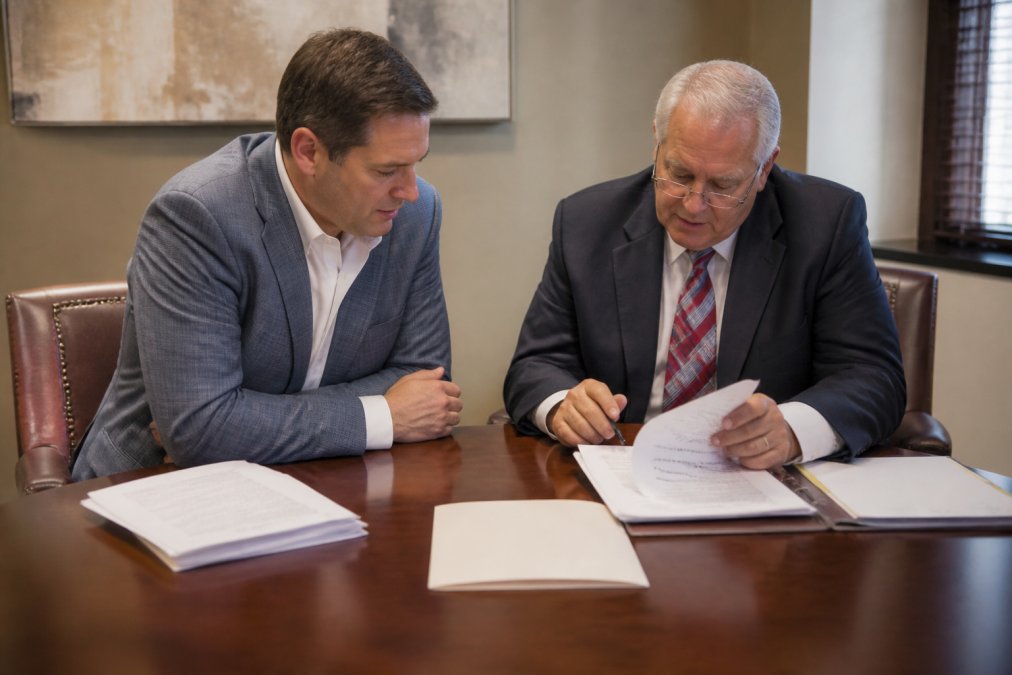
Look for a firm that has handled matters like yours and can explain its approach in plain terms. Ask how the firm handles discovery, how it communicates about costs, and what it sees as the realistic range of outcomes.
Holcomb Law Group approaches commercial disputes with deep preparation and steady judgment, whether the path runs through mediation, arbitration, or trial. The firm's AV rating from Martindale-Hubbell and listing in The Best Lawyers in America reflect a commitment to the craft.
If your dispute involves a related issue, such as business collections under Mississippi law or insurance coverage questions, ask whether the firm handles those matters as well. Many commercial disputes overlap with collections, coverage, or subrogation questions, and having one team that sees the whole picture saves time and money.
A short checklist before you hire:
- Confirm the firm has handled your specific type of claim
- Ask for a written plan covering discovery, motion practice, and settlement posture
- Understand how fees and costs will be communicated
- Verify licensure in every state where the case may be filed
- Ask who will actually handle the day-to-day work
The Mississippi Rules of Civil Procedure and the Mississippi Secretary of State's business resources are useful starting points for understanding the procedural and corporate framework your case will operate within.
A commercial dispute rarely gets simpler by waiting. Evidence disappears, memories fade, and the other side gains use with every delay. If your business is facing a contract, partnership, or fiduciary dispute, Holcomb Law Group can help you assess the situation, plan a realistic path forward, and pursue the outcome that best serves your interests. The firm handles commercial litigation, mediation and arbitration, business collections, and insurance coverage matters for clients across Mississippi and Tennessee. Holcomb Law Group provides a steady, prepared advocate on your side.
Frequently Asked Questions
What does a commercial litigation attorney do?
A commercial litigation attorney represents businesses and individuals in disputes arising from contracts, partnerships, corporate governance, and unfair competition. That work includes investigating claims, conducting discovery, negotiating settlements, and arguing motions in state or federal court. In Mississippi, these attorneys often handle breach of contract claims, fiduciary duty disputes, and shareholder disagreements. Many also guide clients through mediation and arbitration before a lawsuit is filed, which can resolve commercial disputes faster and at lower cost than trial.
What qualifies as commercial litigation?
Commercial litigation covers disputes between businesses or between a business and an individual over money, contracts, or obligations. Common examples include breach of contract, fraudulent misrepresentation, trade secret misappropriation, unfair competition, partnership dissolution, and shareholder disputes. The category also includes claims tied to corporate governance and injunctive relief. If your conflict involves a commercial agreement, a business relationship, or a financial obligation, it likely falls under commercial litigation and may require specialized legal counsel.
How do I initiate a business lawsuit in Mississippi?
A business lawsuit in Mississippi typically begins with a complaint filed in the appropriate circuit or chancery court, followed by service of process under the Mississippi Rules of Civil Procedure. Before filing, your attorney will assess the claim, gather documents, and often send a demand letter to attempt settlement. Discovery, motions, and possibly mediation follow. Because venue, filing deadlines, and procedural steps matter, consult a Mississippi-licensed commercial litigation attorney before filing to avoid costly errors.
Can you help settle a business dispute without going to court?
Yes. Mediation and arbitration are common business dispute resolution strategies that resolve commercial disputes without a trial. In mediation, a neutral third party helps both sides reach a voluntary agreement. In arbitration, a neutral decides the outcome, which is often binding. Many Mississippi contracts require one of these methods before litigation. Even when a lawsuit is filed, most cases settle through negotiation. A commercial litigation attorney can prepare your case for trial while pursuing a faster, less expensive resolution.