 blog
blog
Finding Probate Administrator Legal Services: 2026 Guide
Table of Contents
- What Finding Probate Administrator Legal Services Actually Involves
- How to Vet a Probate Attorney Before You Hire One
- Probate Attorney Consultation Questions to Ask First
- A Realistic Probate Administration Timeline
- How to Settle an Estate Without a Will
- DIY Probate vs. Hiring Counsel: A Cost-Benefit Look
- Conclusion
- Frequently Asked Questions
Last Updated: September 11, 2026
What Finding Probate Administrator Legal Services Actually Involves
Finding probate administrator legal services means locating an attorney qualified to guide an estate through the court-supervised process of validating a will, paying debts, and distributing property. Holcomb Law Group provides legal guidance for executors and administrators.
"Probate administrator" gets used two ways: the person the court appoints to manage an estate, and the attorney who guides that person through the process. This guide covers the second meaning, though the distinction decides who you actually need to hire.
Probate administration is the court-supervised process of identifying a decedent's assets, notifying creditors, paying valid claims, and transferring what remains to the rightful beneficiaries. The personal representative (an executor when named in a will, or an administrator when appointed by the court) carries legal authority to act on the estate's behalf, and a fiduciary duty to act in the estate's interest rather than their own.
That authority does not arrive automatically. The court issues letters of administration or letters testamentary, and until those documents exist, banks and title companies will not release anything.
Mississippi courts probate information
When Probate Is Required and When It Is Not
Probate is required when the decedent owned assets titled in their sole name, without a beneficiary designation or survivorship provision. It is generally not required for assets held in a revocable living trust, accounts with payable-on-death or transfer-on-death designations, life insurance proceeds paid to a named beneficiary, or property owned jointly with right of survivorship.
Small estates sometimes qualify for simplified procedures. Thresholds and forms differ by state, so confirm the current rule with the clerk of court in the county where the estate sits.
If the decedent died without a will, they died intestate, and state law determines who inherits. With a valid will, they died testate, and the will controls, subject to the court's validation. Either way, someone must be appointed before anything moves.
How to Vet a Probate Attorney Before You Hire One
Most people pick the first attorney who answers the phone. That is the biggest mistake in this process: probate is a procedural specialty, and a general practitioner who takes the case occasionally will bill you to learn on your file.
Start with licensing and discipline. Your state bar association maintains a public directory and disciplinary history. Verify the attorney is licensed and in good standing, and check for public discipline. A five-minute search tells you more than any referral.
Then narrow by actual probate volume. Ask how many estates the attorney has administered in the past year, and in which counties. Probate is county-level work; familiarity with a clerk's filing preferences saves weeks.
The third filter is capacity. A solo practitioner handling forty open estates may not return your calls for a week. Ask who handles communication and how often you should expect updates. If the answer is vague, that is your answer.
- License verified through the state bar directory
- No public discipline on record
- Handles probate as a regular part of practice, not occasionally
- Has filed in the county where the estate sits
- Named a specific person responsible for client updates
- Provided a written fee agreement before starting work
Legal Services Corporation finding legal help
Probate Attorney Consultation Questions to Ask First
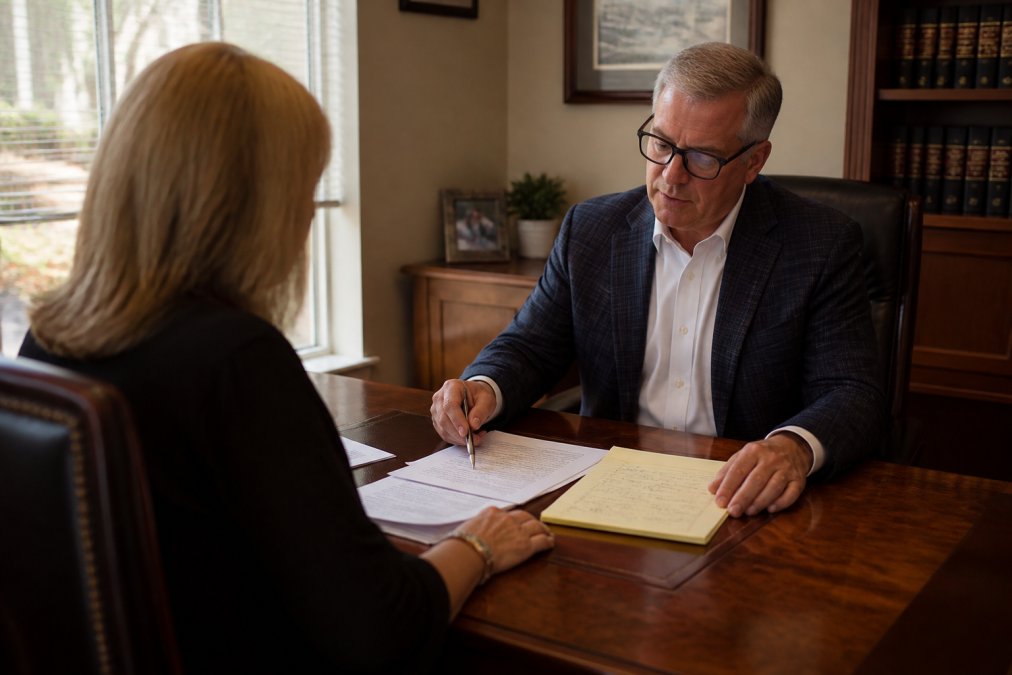
The first consultation is an interview, and you are hiring. Come with written questions, take notes, and do not sign anything at the table. The goal is not to be impressed, it is to gather enough specific information to compare two or three attorneys on the same criteria.
What to Bring to the First Meeting
A prepared client gets a more useful consultation. Bring these items so the attorney can give you a real answer:
- Certified copy of the death certificate (order several, banks, title companies, and the court each want one)
- The original will, if one exists, plus any codicils
- A written list of assets with approximate values: real estate, bank and brokerage accounts, retirement accounts, vehicles, business interests
- A written list of debts: mortgage, credit cards, medical bills, personal loans
- Names, addresses, and relationships of all heirs and beneficiaries
- Any prior probate filings, letters of administration, or court correspondence
- Your own questions, written down, with space for notes
If the will is missing, say so at the start. A lost will changes the strategy, and the attorney needs to know before quoting a fee.
The Questions That Actually Separate Attorneys
- Who will actually do the work? If a paralegal or junior associate handles the filings, ask for the name of the person who will return your calls.
- What is your fee structure: flat fee, hourly, or a percentage of the estate? Ask what is included and what triggers extra charges, a hearing, a creditor dispute, or a beneficiary who stops responding can each reset the meter.
- What costs do you expect beyond your fee? Court filing fees, publication notices, appraisals, and bond premiums are separate from attorney compensation and paid by the estate, not the attorney.
- What is the realistic timeline for an estate like this one? Vague answers usually mean the attorney has not thought about it. Ask for a range in months, not "it depends."
- What do you need from me in the first thirty days? This tells you how organized the practice is and what your workload will look like.
- How do you handle disputes among beneficiaries? Family conflict is the most common cause of delay. Ask whether the firm litigates or refers out.
- Are you willing to work remotely for routine matters? Many filings and signatures can be handled without in-person visits, and some courts accept electronic filing.
- What happens if you become unavailable? Solo practitioners get sick and take vacations. Ask who covers the file.
Red Flags to Watch For
A confident attorney is not the same as a prepared one. Walk away, or get a second opinion, if you see any of these:
- No written fee agreement. Every engagement should be reduced to writing before work begins.
- Guaranteed outcomes. No attorney can promise a specific distribution or a specific closing date.
- Pressure to sign at the table. A legitimate firm will let you take the agreement home.
- No questions about the estate. An attorney who does not ask about debts, real estate, or family dynamics is not planning your case.
- Reluctance to name a fee range. "We'll figure it out as we go" is how bills grow.
Legal Services Corporation finding legal help
A Realistic Probate Administration Timeline
A straightforward estate with a valid will, cooperative beneficiaries, and no creditor disputes typically runs several months to over a year from filing to closing. The variation comes almost entirely from three things: the court's docket, creditor response periods, and whether anyone contests the will. An estate with a contested will, a missing heir, or a business interest can run two years or more.
Here is how the phases generally sequence.
| Phase | What Happens | Typical Duration |
|---|---|---|
| Petition and appointment | File petition, court issues letters | Weeks to a few months |
| Notice and inventory | Notify creditors and heirs, file inventory | First few months |
| Creditor claim period | Claims filed, valid ones paid | Set by state statute |
| Accounting and distribution | Final accounting, court approval, distribute | Final months |
| Closing | Court discharges the personal representative | After distribution |
What Actually Drives the Timeline
The table above is the skeleton. The friction points below most often add months:
- The court's docket. Some counties set hearing dates within weeks; others are backlogged for months. Ask the clerk how far out hearings are scheduled before you file.
- The creditor claim window. This is a statutory period, commonly several months from the date of notice, during which creditors can file claims against the estate. You cannot close the estate until it runs. Confirm the exact deadline with the clerk of court or your attorney, because missing it can bar valid claims or expose the estate to liability.
- Appraisal and valuation. If the estate includes real estate or a business interest, an appraisal or business valuation may be required before the inventory can be filed, adding weeks.
- Beneficiary cooperation. A beneficiary who will not sign a receipt, provide a tax ID, or respond to correspondence can stall distribution indefinitely. This is the single most common cause of delay in otherwise simple estates.
- Tax filings. A final income tax return and, for larger estates, a federal estate tax return may be required. The estate tax return is due nine months after death, with a six-month extension available, and the estate cannot close until tax matters are resolved.
A Note on "Typical"
Do not anchor on a national average. Probate is county-level work, and the same estate can close in four months in one county and fourteen in another. The most useful timeline is the one your attorney gives you after reviewing the specific assets, debts, and family situation, in writing, with assumptions stated.
Ask the clerk of court for the current filing requirements before your attorney files anything. Some counties require specific cover sheets, original signatures, or certified copies that a first-time filer will not know about, and a rejected filing resets your place in line.
When the Timeline Slips
If you are three months in and nothing has been filed, that is a signal, not a setback. Ask your attorney for a written status update with the next three concrete steps and their target dates. A prepared attorney will have them. An unprepared one will change the subject.
How to Settle an Estate Without a Will
When there is no will, the estate is intestate and state intestacy law decides who inherits. You still need a court-appointed administrator, and the process is largely the same as testate probate, minus the step of validating a will.
The practical differences are worth knowing. Intestacy statutes set a fixed order of inheritance, typically a surviving spouse first, then children, then parents and more distant relatives. If no eligible relative exists, the estate can pass to the state, rare but real, and the reason estate planning matters even for modest assets.
Appointment is also more contested in intestate estates. With no will naming a personal representative, multiple relatives may petition for the role, and the probate judge decides. Priority usually follows the intestacy order, but the judge has discretion.
If you are the one stepping forward, expect to post a bond unless the will waived it or the heirs agree otherwise. Bonds are insurance for the estate, and the premium is an estate expense.
DIY Probate vs. Hiring Counsel: A Cost-Benefit Look
Doing it yourself is genuinely possible for small, uncontested estates where all heirs agree and no creditor disputes exist. Court clerks can explain filing procedures, and many counties publish forms online.
What clerks cannot do is give legal advice. They cannot tell you which assets belong in the estate, whether a claim is valid, how to handle a beneficiary who refuses to sign, or your personal liability exposure if you make a mistake. That line is bright and it matters.
Mississippi Secretary of State business and estate resources
The honest trade-off: if the estate is small, everyone agrees, and there is no real property to retitle, self-representation can work. If there is real estate, a business interest, an out-of-state asset, a disputed claim, a missing heir, or family friction, the cost of fixing a mistake will exceed the cost of doing it correctly the first time.
A middle path exists too: hire counsel for the initial petition and the closing, and handle routine paperwork yourself. Some firms structure engagements that way. Ask.
Conclusion
Probate rewards preparation and punishes improvisation. Executors who move through it smoothly verified their attorney's credentials, asked about fees in writing, and understood the timeline before the first filing.
Holcomb Law Group handles estate and probate administration for clients across Mississippi, Tennessee, and the Southeast, alongside wills and estates planning, commercial litigation, and mediation services. The firm holds an AV rating from Martindale-Hubbell and is listed in The Best Lawyers in America.
If you are facing an estate administration and want steady counsel, consider Holcomb Law Group.
Frequently Asked Questions
What is the difference between an executor and a probate administrator?
An executor is named in a valid will to carry out the decedent's wishes. A probate administrator is appointed by the court when there is no will, when the named executor cannot serve, or when the will does not name one. Both roles carry the same core fiduciary duty: inventory assets, notify creditors, pay valid debts, and distribute what remains to the rightful beneficiaries under court supervision.
What documents should I have ready before meeting with a probate attorney?
Bring the original will if one exists, a certified death certificate, a list of known assets and debts, recent bank and brokerage statements, property deeds, vehicle titles, and any prior tax returns. If you are the proposed administrator, also bring identification and any court notices you have received. Having these ready lets the attorney assess the estate and outline the probate process on the first visit.
Do I need a lawyer to serve as a probate administrator?
You are not always required to hire counsel to serve as administrator, but probate involves court petitions, creditor claims, inventory and accounting filings, and strict statutory deadlines. An error can delay distribution or expose you personally. Many administrators retain a probate attorney to handle filings and advise on fiduciary duty while still making the decisions themselves.
How long does the probate administration timeline usually run?
Timelines vary by state, estate size, and whether the will is contested. Simple estates with clear assets and no disputes often close within several months, while larger estates, creditor disputes, or intestate matters can take a year or longer. Your attorney can give a realistic estimate after reviewing the inventory, debts, and any court requirements in your jurisdiction.