 how-to
How Can You Prove Breach of Contract in Court?
Last Updated: October 27, 2026
Quick Summary
To prove breach of contract in court, you must show a valid contract existed, that you performed or were ready to perform, that the other party failed to perform, and that this failure caused you financial damages. Courts rely on documents, communications and testimony to establish each element.
- Gather the signed agreement, amendments, and any emails or texts showing the terms were discussed or accepted.
- Document your own performance with delivery receipts, invoices, and proof of payment.
- Courts generally distinguish material breaches from minor ones, so explain why the failure defeats the deal's purpose.
- Prove damages with records tied to the breach, and show you took reasonable steps to limit your losses.
Table of Contents
- What You Must Establish to Prove Breach of Contract
- Evidence Needed to Prove Breach of Contract, Element by Element
- Breach of Contract Examples and Material Versus Minor Breaches
- How to Prove Damages in a Breach of Contract Case
- Using a Breach of Contract Demand Letter Before Filing Suit
- Preserving and Presenting Proof at Trial
- Your Next Step: Speaking With a Business Litigation Attorney
- Frequently Asked Questions
To win a breach of contract case, you must prove four things: a valid contract existed, you held up your end, the other side failed to perform, and that failure cost you money. The process is more manageable when you know what the court will look for. A breach of contract is a failure to do what a valid agreement requires, and it is the basis for most civil claims over business deals (breach of contract | Wex | US Law).
Courts do not decide these cases on feelings. They look at documents, communications and testimony, and each element must be backed by proof. Below, each element, the evidence that supports it, and how to present your case at trial are discussed. Keep in mind that contract law is largely state law, so the rules, deadlines and procedures can vary, and you should confirm the specifics for your jurisdiction.
What You Must Establish to Prove Breach of Contract
A breach of contract claim generally requires you to show the contract existed, that you performed or were ready to perform, that the defendant failed to perform, and that you suffered damages.
Think of these four elements as a checklist. If any one is missing, the claim usually fails no matter how unfair the other side's conduct seems.
Proving a Valid and Binding Contract
The first step is showing that a legally binding agreement existed. Courts generally look for three basic parts:
- Offer: One party clearly proposed terms.
- Acceptance: The other party agreed to those terms.
- Consideration: Each side gave something of value, such as money, services or goods.
A written contract makes this easiest to prove. But oral agreements can also be enforceable in many situations, though they are harder to establish. Some contracts, such as those involving real estate or agreements that cannot be completed within one year, may need to be in writing under state law.
Gather the signed agreement, drafts, purchase orders, and any emails or texts where the terms were discussed or accepted. Save everything, even informal messages.
Showing Your Own Performance or Tendered Performance
You must show that you did what the contract required, or that you were ready and willing to do it but the other side prevented you.
For example, if you were supposed to deliver goods by a set date, your delivery receipts, shipping records and invoices help prove it.
Keep your own records organized by date. Gaps in your timeline give the other side room to challenge your claim.
Evidence Needed to Prove Breach of Contract, Element by Element
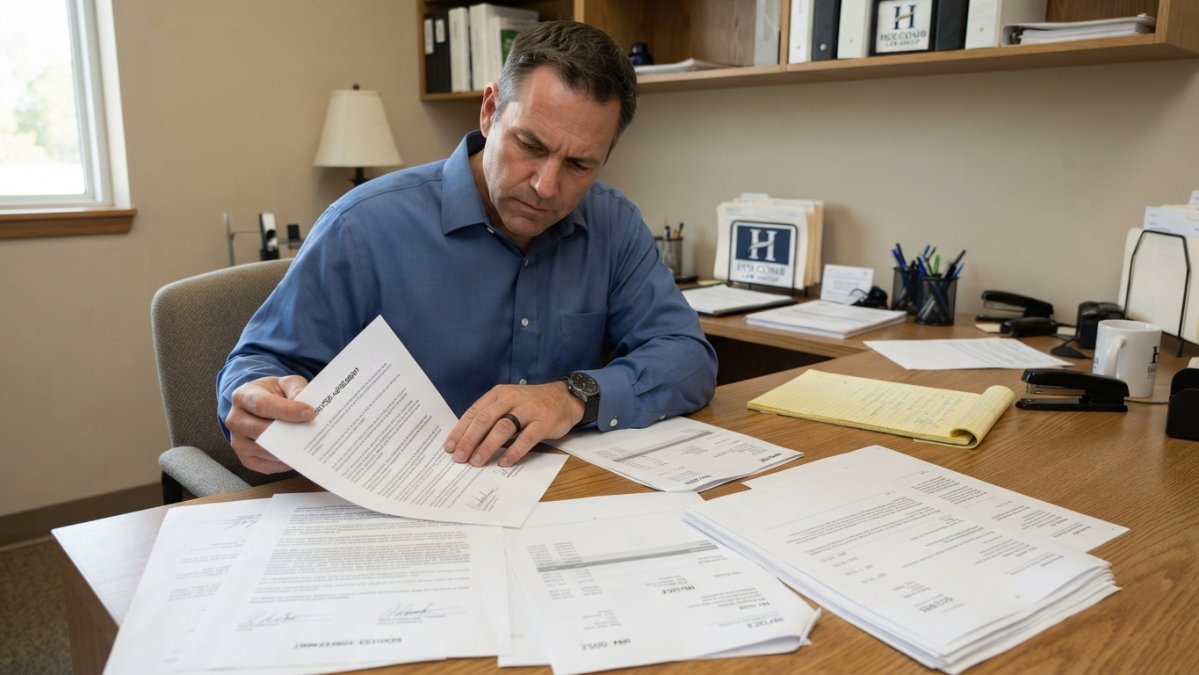
Good evidence is tied to a specific element. Organize your file this way and you will see gaps early, while there is still time to fill them. The checklist below is the practical version most litigants wish they had on day one.
Existence of the contract
- The signed agreement and every amendment, addendum, or change order.
- The original offer, quote, or proposal and the acceptance that followed.
- Purchase orders, statements of work, and invoices that reference the deal terms.
Your performance or tendered performance
- Delivery receipts, bills of lading, and shipping confirmations.
- Timesheets, project logs, and progress reports.
- Proof of payment (bank statements, canceled checks, wire confirmations).
The other side's failure to perform
- Records of missed deadlines and non-payment.
- Written refusals, cancellation notices, and emails admitting the problem.
- Internal communications from the other side that surface through discovery.
Damages
- Lost-revenue calculations tied to historical sales or signed deals.
- Replacement-cost invoices for cover purchases.
- Records of incidental and consequential costs caused by the breach.
Preserving and authenticating digital evidence
Export emails and texts with metadata intact, dates, senders, recipients, and timestamps, rather than relying on screenshots alone.
Authentication is the gatekeeper. Under the Federal Rules of Evidence, a document must be shown to be what you claim it is, usually through the person who created or received it or through a process that verifies its origin.
Common admissibility problems to anticipate
- Hearsay: Statements made outside court offered to prove the truth of the matter are generally excluded unless an exception applies. Business records and party admissions are common exceptions, so talk with your attorney about which records fit.
- Incomplete records: A partial email thread or a screenshot without context invites challenge. Produce the full conversation.
- Ambiguous contract terms: Vague language can be explained by parol evidence in some circumstances, but courts vary. Keep drafts and negotiation history that show what the parties intended.
Discovery strategies for filling gaps
Discovery is where you obtain records you do not already hold. Requests for production can reach emails, internal memos, payment records, and project-management systems. Interrogatories and depositions lock down the other side's account before trial.
The table below organizes the main evidence types by the element each one supports, so you can spot gaps in your file early.
| Element | Evidence to gather | Purpose |
|---|---|---|
| Existence of the contract | Signed agreement, amendments, offers and acceptances | Shows a binding deal was formed |
| Your performance | Delivery receipts, timesheets, proof of payment | Shows you did or were ready to do your part |
| Other side's failure | Missed deadlines, written refusals, internal emails | Shows the breach occurred |
| Damages | Lost-revenue calculations, replacement invoices | Ties financial loss to the breach |
| Mitigation | Records of steps taken to limit the loss | Shows reasonable efforts to reduce harm |
Breach of Contract Examples and Material Versus Minor Breaches
Not every failure to perform is a breach that justifies a lawsuit. Courts distinguish between material and minor breaches.
A material breach goes to the heart of the agreement and prevents the other side from getting the main benefit of the deal. Examples include:
- A contractor who abandons a construction project halfway through.
- A supplier who never delivers the goods ordered.
- A party who refuses to pay for work already completed.
A minor breach is a smaller failure that does not defeat the purpose of the contract.
Whether a breach is material depends on the facts. Courts often weigh how much of the benefit was lost, whether the harm can be compensated with money, and whether the breaching party acted in good faith.
How to Prove Damages in a Breach of Contract Case
Damages are the financial harm the breach caused. Without proof of loss, a court may award little or nothing even if the breach is clear.
Most cases seek compensatory damages, which aim to put you in the position you would have been in if the contract had been performed. To document them:
- List every loss, such as lost profits, extra costs to find a replacement, and interest on money owed.
- Tie each number to a record, like an invoice, bank statement or expert estimate.
- Show causation, meaning the loss came from the breach and not from something else.
- Address mitigation. Courts generally expect you to take reasonable steps to limit your losses.
Lost profits are often the hardest to prove, because courts want reasonable certainty, not guesses. Historical sales data and a track record of similar deals help support the estimate.
Using a Breach of Contract Demand Letter Before Filing Suit
Many disputes settle before a courtroom is involved. A written demand letter is often the first step.
A demand letter states the contract terms, describes the breach, lists the amount owed or the action demanded, and sets a deadline for response.
Send demand letters in a way you can prove was delivered, such as certified mail with a return receipt. Keep copies of everything.
Preserving and Presenting Proof at Trial
Strong evidence still has to be presented clearly. At trial, the judge or jury will hear your story through witnesses, exhibits, and documents, so organization and sequencing matter as much as the file itself.
How the case moves from pleading to proof
The complaint states the claim and the elements you intend to prove. The answer raises defenses. Discovery then exchanges documents and testimony, and pretrial motions may narrow what evidence reaches the jury. By the time trial begins, the dispute should be framed around specific facts the court must decide.
The burden of proof
In a civil breach of contract case, the plaintiff generally carries the burden of proving each element by a preponderance of the evidence, meaning it is more likely than not that the claim is true. That is a lower standard than the criminal standard, but it still requires credible, connected proof on every element. If any element is left to guesswork, the claim can fail even when the equities favor you.
Organizing exhibits around the elements
Prepare an exhibit list that maps each document to the element it supports. Number exhibits consistently, prepare copies for the court, opposing counsel, and each witness, and confirm authentication before trial so you are not scrambling in front of the judge. Clear communication with counsel while organizing this evidence also matters, so review practical steps to avoid common lawyer communication problems.
Witness sequencing
Witnesses who saw the contract formed, the performance given, or the breach happen can be powerful. Sequence them so the story builds: start with the agreement, move to your performance, then the failure, then the damages. Keep direct examination focused on facts the witness personally observed, and prepare for cross-examination on gaps in the timeline.
Objections and admissibility at trial
Expect objections on hearsay, foundation, relevance, and authenticity. The party offering a document usually must lay foundation through a witness who can identify it and explain how it was created and kept. Business records often come in through a custodian or a records affidavit. If an objection is sustained, have a backup exhibit or witness ready so the element is not left unproven.
Anticipating defenses
Be prepared for the other side to argue that no valid contract existed, that you failed to perform first, that the breach was minor rather than material, that damages are overstated, or that you failed to mitigate. Your evidence should answer each of these points before they are raised, and your witness list should include someone who can speak to each defense.
Discovery as trial preparation
Discovery is the stage where both sides exchange documents and take depositions. Use it to lock down the other side's account and to find records you may not have. Requests for emails, internal memos, and payment records often reveal the most useful proof, and deposition testimony can be used at trial to impeach a witness who changes stories.
Federal Rules of Civil Procedure
Your Next Step: Speaking With a Business Litigation Attorney
Proving a breach of contract is a structured process, but each case turns on its own facts and on the rules of the state where it is filed.
Holcomb Law Group provides legal counsel and mediation services, and focuses on commercial litigation. For questions about your situation, contact the firm to schedule a consultation and learn what evidence your case will need.
Frequently Asked Questions
What evidence can prove a breach of contract in court?
Courts usually look for the signed contract or proof of an oral agreement, records of your own performance, documents showing the other party failed to perform, and proof of resulting harm. Written communications such as emails, texts, invoices, purchase orders and payment records are often the strongest proof. Keep originals, note who created each document and when, and preserve digital files in their native format. Witness statements and documents can support the timeline. Requirements for admissibility vary by court, so confirm the rules that apply where your case is filed.
What are the elements of a breach of contract claim?
A breach of contract claim generally requires proof of four elements: a valid and binding contract, your performance or tendered performance, the other party's failure to perform, and damages caused by that failure. Each element needs its own evidence. A contract may be written or oral, and the terms must be specific enough for a court to enforce. Because the precise standards and any statute of limitations depend on the state and the contract type, review the rules in the jurisdiction where you plan to file.
How can you prove damages in a breach of contract case?
Damages are proven with documents that show the financial loss caused by the breach. Compensatory damages typically require records such as the contract price, the cost of obtaining substitute performance, lost profits supported by sales history, and receipts for other expenses. Organize calculations in a clear schedule that ties each figure to a source document.
Should you send a demand letter before filing a breach of contract lawsuit?
A written demand letter identifies the contract, describes the specific breach, states what you require to resolve the matter, and sets a deadline for response. It creates a dated record that you attempted resolution. Some contracts require notice or mediation before suit, so check the agreement first.