 how-to
How to Assess Lawyer Case Preparation: A Client's Guide
Table of Contents
- Why Case Preparation Assessment Matters Before Trial
- Questions to Ask a Lawyer About Your Case Preparation
- How Lawyers Evaluate Evidence: What You Should See
- A Case Preparation Checklist for Clients
- Lawyer Communication Expectations: What to Expect and When
- How to Assess Lawyer Case Preparation at Each Stage
- When to Document Concerns and Seek a Second Opinion
- Frequently Asked Questions
Last Updated: October 12, 2026
Why Case Preparation Assessment Matters Before Trial
Learning how to assess lawyer case preparation is one of the most valuable things you can do as a client.
This guide from Holcomb Law Group walks you through the questions to ask, the documents to track, and the warning signs that a case is drifting.
Most clients never see this work happen. That is the problem. You hand over a retainer and then wait.
Questions to Ask a Lawyer About Your Case Preparation
The fastest way to assess preparation is to ask direct questions and listen for specific answers. Vague replies are a signal. Detailed ones tell you the work is happening.
Ask these at your next meeting:
- What is your case theory in one sentence?
- Which documents have you reviewed so far?
- Who are the witnesses, and have you spoken with them?
- What is the next court deadline?
- How will you update me, and how often?
A prepared lawyer answers each one without scrambling. If your lawyer needs to "check and get back to you" on every question, that tells you something about where your file sits in the stack.
Questions About Evidence and Discovery
Discovery is the formal process where both sides exchange information before trial (Civil Cases). Ask what has been requested, what has been received, and what is still missing.
You want to hear about specific gaps. "We're still waiting on two sets of records" is a real answer. "We're working on it" is not.
Questions About Strategy and Case Theory
Case theory is the story that ties your facts together. Ask your lawyer to explain it plainly. If they cannot, the theory may not be finished.
Also ask about weaknesses. A lawyer who admits the soft spots in your case is being honest with you. One who promises a sure win is not.
How Lawyers Evaluate Evidence: What You Should See
Evidence evaluation means sorting every document, record, and statement by how much it helps or hurts your case.
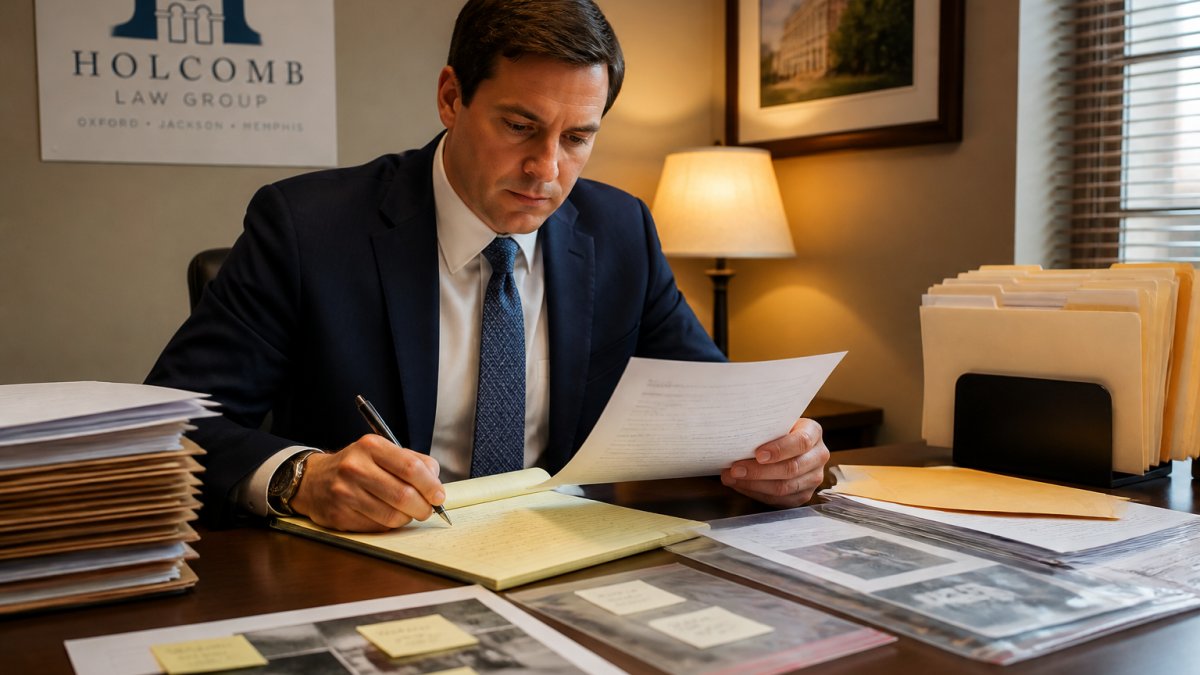
Here is what that process should produce:
- A list of relevant documents, marked as helpful, harmful, or neutral
- A note on which exhibits are admissible in court
- A summary of what each witness can testify to
- A list of missing records still to be gathered
Admissibility matters because not every document can be shown to a judge or jury. Rules of evidence govern what gets in.
The Federal Rules of Evidence set the national framework for what courts accept, and state courts follow their own versions of these rules.
A Case Preparation Checklist for Clients
You are not a passive passenger in your own case. A case preparation checklist for clients keeps you organized, gives your lawyer better raw material, and, just as important, creates a record you can use to evaluate whether the material is being put to work.
Work through this list and bring updates to each meeting:
- Collect all contracts, letters, and emails related to the dispute
- Save receipts, invoices, and payment records
- Write a dated timeline of events in your own words
- List every person who saw or knows something relevant
- Keep a folder of medical or repair records, if applicable
- Track every deadline your lawyer mentions
- Note the date and substance of each conversation with your lawyer
That last group matters more than people expect. A written record of what you were told, and when, protects you if communication breaks down later, and it gives you something concrete to point to if you ever need a second opinion.
Documents to Gather and Organize
Start with anything signed. Contracts and agreements anchor most cases. Then move to correspondence: emails, texts, and letters, in date order. Label everything clearly. A tidy folder of labeled documents saves your lawyer hours, and those hours are your money.
Organize by category, not by date alone. A common structure that works for most matters:
- Agreements, contracts, amendments, statements of work
- Correspondence, emails, texts, letters, in chronological order
- Financial records, invoices, receipts, payment confirmations, bank statements
- Incident records, reports, photographs, repair estimates, medical records if applicable
- Timeline, a single dated document in your own words
- People, names, roles, and contact information for everyone with relevant knowledge
How to Tell Whether Your Documents Are Being Used
Gathering documents is only half the job. The other half is whether your lawyer is actually reviewing and organizing them. You can check this without a law degree:
- Ask your lawyer to name two specific documents that support your case theory and two that cut against it. A prepared lawyer can answer immediately.
- Ask which exhibits are likely admissible and which face evidentiary objections. If the answer is "we'll see," the review may not be finished.
- Ask what is still missing from the file and who is responsible for obtaining it.
- Ask to see the exhibit list or document index. If one exists, it will be shared.
If your lawyer cannot identify which documents help and which hurt, the documents may have been collected but not analyzed. That is a preparation gap, not a paperwork gap.
Do not delete emails, texts, or social media posts related to your case, even ones that look unhelpful. Destroying evidence can seriously damage your case and may carry legal consequences.
Keep a simple log of every document you send and the date you send it. If a document you provided never appears in the case file or the exhibit list, you have a concrete question to ask, and a written record of when you asked it.
Lawyer Communication Expectations: What to Expect and When
Clear lawyer communication expectations should be set in writing at the start. Ask how often you will get updates, who will return your calls, and what triggers a proactive update.
A reasonable baseline for most cases:
- A response to non-urgent questions within a few business days
- An update after every major hearing, filing, or settlement offer
- Advance notice of every court deadline that affects you
- A clear point of contact if your lawyer is unavailable
If weeks pass with silence, that is not normal. The American Bar Association's model rules on client communication describe a lawyer's duty to keep clients reasonably informed, and most state bars enforce similar standards.
How to Assess Lawyer Case Preparation at Each Stage
Readiness looks different at each phase of a case. Knowing the criteria for each stage lets you judge progress with real evidence instead of gut feeling.
Use a simple three-point scale for each item: Met (you have seen the artifact or heard a specific answer), Partial (you have heard a general assurance but seen nothing), or Not Met (no answer, no artifact, or an evasive response).
| Case Stage | What Ready Looks Like | What You Should Receive | Failure Pattern |
|---|---|---|---|
| Initial assessment | Facts gathered, claims and defenses identified, venue and limitations checked | A written case summary and a stated case theory in one or two sentences | Case theory changes every meeting with no new facts |
| Pleadings | Complaint or answer drafted, filing deadline calendared, service tracked | Copies of every filing and the calendar entry for the response deadline | Missed or amended filings with no explanation |
| Discovery | Written discovery served, responses tracked in a log, gaps flagged | A discovery status log showing what was requested, received, and outstanding | "Still working on it" with no list of outstanding items |
| Depositions | Witnesses prepped, outlines drafted, exhibits marked for each deponent | A debrief memo or call after each deposition | No debrief, no outline, no notice of who is being deposed |
| Pretrial motions | Dispositive and evidentiary motions drafted and filed on time | Copies of every filing plus the hearing date | Motions filed at the deadline with no prior discussion |
| Trial prep | Exhibits organized and numbered, witnesses confirmed, logistics tested | A trial checklist and exhibit list you can review | No checklist, no exhibit list, witnesses unconfirmed close to trial |
Readiness Criteria by Case Stage
Early on, readiness means your lawyer can explain your claims and the other side's defenses without notes. Ask for the case theory in one sentence. If it takes ten minutes and three restarts, the theory is not finished.
Near trial, readiness is logistics: exhibits numbered and admitted or flagged for objection, witnesses confirmed and under subpoena where needed, courtroom technology tested, and a trial checklist in hand.
How Case Type Changes the Assessment
The criteria above assume a litigated matter headed toward trial. The weight shifts by case type:
- Negotiation-heavy matters (contract disputes, insurance claims, commercial settlements): the key artifacts are a damages analysis, a settlement authority range, and a written assessment of the other side's leverage. Ask what number your lawyer would accept today and why.
- Discovery-intensive matters (employment, personal injury, complex commercial): the discovery log is the single best preparation indicator. If it does not exist, preparation is not being tracked.
- Hearing-driven matters (motions, injunctions, administrative appeals): readiness is the brief and the record cites. Ask which exhibits support each argument.
- Mediation-bound matters: readiness is a mediation statement, a settlement range with reasoning, and a plan for what happens if mediation fails.
Requirements also vary by jurisdiction and by the judge assigned. Ask your lawyer what the local rules and the judge's standing order require, a prepared lawyer will know both without looking them up.
Preparation is visible at every stage if you know what to look for. Ask for the documents, not just the assurances, and score what you actually receive.
When to Document Concerns and Seek a Second Opinion
Document concerns the moment a pattern appears, not after months of frustration.
Seek a second opinion when you see any of these:
- Missed court deadlines or filings
- No contact for long stretches despite your follow-ups
- Evasive answers about case status or strategy
- A refusal to explain the case theory in plain terms
- Pressure to settle without any analysis of your options
You can consult another attorney without firing your current one. Many offer a short review of your file.
A second opinion is not a betrayal. It is risk assessment, and it is your right as a client.
If your case is heading toward trial and you are not sure the preparation is there, that uncertainty is worth acting on.
Frequently Asked Questions
How can I tell if my lawyer is preparing my case properly?
Look for concrete signs: your lawyer should be able to explain your case theory, identify key evidence and witnesses, and outline upcoming deadlines. Ask for a case timeline and request updates after major filings or discovery milestones. If your lawyer cannot describe the strengths and weaknesses of your case or seems unfamiliar with recent developments, that is a red flag. A well-prepared lawyer will welcome your questions and provide clear, specific answers about strategy and next steps.
What should a lawyer's case preparation plan include?
A solid preparation plan covers evidence gathering and document review, witness identification and preparation, legal research on applicable statutes and procedural rules, and a timeline for filings and court deadlines. It should also address pretrial motions, deposition schedules, and trial logistics if the case proceeds that far. Ask your lawyer to walk you through the plan and explain how each element supports your case theory. If the plan lacks specifics or your lawyer cannot explain the reasoning behind it, ask follow-up questions.
How often should my lawyer update me about my case?
There is no single rule, but most cases warrant updates after significant events: filing of pleadings, completion of discovery, deposition dates, pretrial motion rulings, and settlement offers. Establish communication expectations early. Ask how often you will receive updates, who will contact you, and how quickly you can expect a response to your questions. If weeks pass without any communication and you are unsure what is happening, that is a sign to request a status update and clarify expectations.
What should I do if I am concerned about my lawyer's preparation?
Start by documenting your concerns with specific examples: missed deadlines, vague answers, lack of updates, or unfamiliarity with case details. Request a meeting to discuss your concerns directly. Ask for a written case status and upcoming milestones. If the response does not resolve your concerns, you may seek a second opinion from another attorney who can review your file and assess whether the preparation meets professional standards. You can also contact your state bar association for guidance on lawyer conduct and client rights.