 ultimate-guide
How to Prepare for a Deposition: 2026 Witness Guide
Table of Contents
- How to Prepare for a Deposition: What the Process Actually Involves
- Your Deposition Preparation Checklist: The Week Before Through Deposition Day
- How Long Does a Deposition Take? Scheduling, Breaks, and the Transcript
- Tips for Answering Deposition Questions Without Volunteering Information
- Deposition Questions and Answers Examples to Practice With Your Legal Team
- Remote and Hybrid Deposition Preparation: Technology, Accommodations, and Staying Composed
- After the Deposition: Transcript Review, Errata, and Follow-Up
- Conclusion: Treat Deposition Preparation as Your Strongest Protection
- Frequently Asked Questions
Last Updated: October 13, 2026
How to Prepare for a Deposition: What the Process Actually Involves
A deposition is a formal, out-of-court proceeding in which a witness answers questions under oath, with a court reporter creating a verbatim transcript that can later be used at trial. Learning how to prepare for a deposition in 2026 means understanding the process itself, not just memorizing answers. This guide from Holcomb Law Group walks through what happens, what to bring, and how to stay composed.
Most witnesses walk in expecting a courtroom. They get a conference room instead. That mismatch throws people off, and it is why preparation matters more than nerve.
Who Is in the Room
A typical deposition includes the witness, the questioning attorney, your own attorney, and a court reporter. If multiple parties are involved, each side may send counsel. A videographer may also record the session when the case may go to trial and the witness could be unavailable later. Under the Federal Rules of Civil Procedure, a deposition is generally limited to one day of seven hours unless the parties stipulate otherwise or the court orders differently, a useful benchmark when you are planning your schedule.
How Objections Actually Work
Attorneys may object during questioning, but the objection is usually about the form of the question or a privilege, not about whether you should answer. In most situations, the witness still answers, and the objection is preserved for the judge to rule on later. Your own attorney may instruct you not to answer in narrow circumstances, such as a question that calls for privileged information. If that happens, stop talking and let your attorney handle it. Do not decide on your own to refuse a question.
Breaks, the Record, and the Transcript
You can ask for a break. If you need water, a restroom, or a moment to collect yourself, say so, the court reporter will go off the record. A common pattern is to take a short break every hour or so, and your attorney can help you set that rhythm in advance.
Everything you say on the record becomes part of the transcript. The court reporter produces that transcript, usually within a few weeks, and it can be read back at trial, used to impeach inconsistent testimony, or cited in motions. That is why precision matters more than speed.
How Preparation Differs by Witness Role
Not every witness prepares the same way. A fact witness who saw a single event may need only a focused review of the documents tied to that event. A party witness, someone suing or being sued, usually needs a broader review of the pleadings and discovery because the questioning will range across the whole case. An expert witness prepares around the opinions in their report and the materials they relied on. If you are not sure which category you fall into, ask your attorney; the answer shapes how much you review and how you practice.
Your Deposition Preparation Checklist: The Week Before Through Deposition Day
Your deposition preparation checklist starts the week before: review the case filings, discovery responses, and relevant documents your legal team provides. Read them with a pen in hand. Mark anything you do not recognize or do not remember.
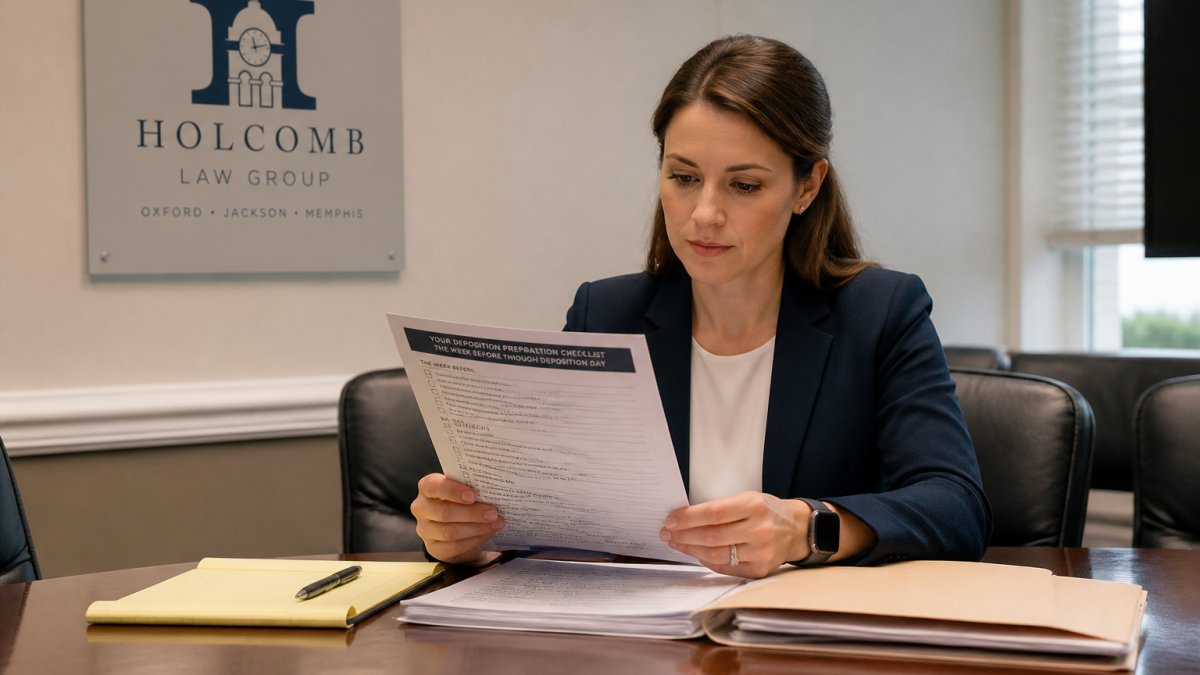
Below is the timeline we walk our own clients through.
| When | What to do |
|---|---|
| 7 days out | Review pleadings, discovery, and exhibits with counsel |
| 3-5 days out | Walk the case timeline and identify gaps in your memory |
| 1-2 days out | Practice likely questions with your attorney |
| Night before | Confirm time, location, parking, and remote-login details |
| Deposition day | Arrive early, dressed appropriately, with documents counsel requested |
Deposition Day: What to Bring and How to Dress
Bring only what your attorney asks you to bring. Anything you carry into the room may become an exhibit. Dress in business attire unless counsel says otherwise. Professional conduct starts before you sit down.
How Long Does a Deposition Take? Scheduling, Breaks, and the Transcript
Most depositions last between two and seven hours, depending on the complexity of the case and the number of exhibits. A simple fact witness may finish in two hours. A party or expert witness in a contested matter can run a full day.
Scheduling is set by agreement between counsel, and the deposition date is confirmed in writing. Breaks are permitted, and you may request one at any point. The court reporter produces a transcript, usually within weeks, and your legal team will review it with you. (Source: the importance of thorough preparation)
Tips for Answering Deposition Questions Without Volunteering Information
The single most important rule: answer only the question asked. A narrow question gets a narrow answer. If the attorney asks whether you saw a document, say yes or no. Do not explain why, when, or what you thought about it.
Listen carefully to each question before responding. Pause. If you do not understand, say so. If you do not know, say you do not know. Never guess to fill a silence.
- Tell the truth; accuracy matters more than polish
- Avoid volunteering information or speculating
- Do not argue with the questioning attorney
- Correct yourself if you misspeak, rather than letting it stand
Deposition Questions and Answers Examples to Practice With Your Legal Team
Practice questions help more than any written guide. Here are examples our attorneys use in preparation meetings.
Q: What did you do next? A: I reviewed the report and forwarded it to my supervisor.
Q: Do you recall the date? A: I do not recall the exact date. I would need to check the document.
Q: Isn't it true you never told anyone? A: That is not correct. I notified my supervisor the same day.
Notice what these answers do: they are short, accurate, and do not open new topics. A common mistake is treating practice as rehearsal for a script. It is not. It is rehearsal for the discipline of answering precisely.
Remote and Hybrid Deposition Preparation: Technology, Accommodations, and Staying Composed
Remote depositions are now routine. Test your connection, camera, and microphone the day before. Use a quiet, well-lit room with a neutral background. Keep your phone off. Log in early.
If you need an interpreter, a reasonable accommodation, or a break schedule for a medical condition, tell your attorney well ahead of the deposition date so arrangements can be made. Do not wait until the session begins.
After the Deposition: Transcript Review, Errata, and Follow-Up
After the deposition, the court reporting service delivers the transcript to counsel. You may have a set period, under the applicable rules, to review it and submit an errata sheet for corrections. Ask your attorney about the deadline in your jurisdiction, because it varies.
Review the transcript carefully. Correct genuine errors of fact or transcription. Do not use errata to change an answer you simply regret. Then follow up with your legal team about what comes next in the litigation.
Conclusion: Treat Deposition Preparation as Your Strongest Protection
A deposition rewards the witness who prepared. The process is unfamiliar, the questions are pointed, and the transcript is permanent. That is exactly why deep preparation matters.
At Holcomb Law Group, our approach is rooted in preparation, steady judgment, and fair representation. We guide clients through deposition preparation, commercial litigation, and mediation across Mississippi and Tennessee, and we build every case on a thorough review of the record. If you have a deposition or a business dispute ahead, talk to our team. Get started with Holcomb Law Group and walk into that room ready.
Frequently Asked Questions
What should I review before a deposition?
Review the case filings and discovery materials your legal team gives you, including contracts, reports, and exhibits you may be asked about. Confirm the deposition date, location, and whether it is in person or remote. Re-read your own prior statements so your testimony stays consistent. Your attorney will typically schedule a preparation meeting to walk through a deposition outline and a question plan, so bring your questions to that session rather than trying to memorize documents on your own.
What happens during a deposition?
A court reporter administers an oath and records every word, and counsel for each side asks questions on the record. You answer truthfully and accurately, one question at a time. Attorneys may object to form or privilege, but you generally still answer unless instructed otherwise. Breaks are allowed, and you can ask to speak with your attorney about specific issues. The transcript becomes part of the case record and may be used at trial testimony if your answers conflict.
How long does a deposition take?
A deposition can run from one hour to a full day or longer, depending on the number of parties, the complexity of the case facts, and how many exhibits are involved. Many witnesses finish in two to four hours. Your legal team can give you a realistic estimate based on the discovery schedule and the scope of questioning. Plan for the possibility of a long session and clear your calendar for the day.
What should I avoid saying as a witness?
Avoid guessing, speculating, or volunteering information beyond the narrow question asked. Do not answer a question you do not understand; ask for it to be repeated or rephrased. Never argue with the questioning attorney or try to explain the whole case. If you do not know or do not remember, say so plainly. These habits protect your testimony mistakes from becoming impeachment material later.
How do I prepare for a remote deposition?
Test your camera, microphone, and internet connection at least a day ahead, and log in early on the deposition date. Choose a quiet, well-lit room with a neutral background and no interruptions. Keep your phone silenced and your documents organized off-camera. Confirm with your legal team how exhibits will be shared and how you will communicate privately during breaks. Remote depositions follow the same rules of testimony as in-person sessions.
What happens after the deposition is over?
The court reporting service prepares a transcript, and you may have a set period under the applicable rules to review it and submit an errata sheet for any corrections. Your attorney will discuss whether corrections are needed and what follow-up the case requires. Post-deposition steps vary by jurisdiction and by whether you are a party, a fact witness, or an expert witness, so rely on your counsel for the deadlines that apply to you.