 how-to
Can Employers Deny Workers Comp Claims Legally?
Last Updated: November 1, 2026
Quick Summary
Yes, an employer can deny workers comp claims, but only on grounds the law allows, and those grounds depend on the facts and the state where the injury happened. The insurance carrier or claims administrator makes the formal decision, so a denial from the employer is not automatically a denial from the insurer. Many denials can be challenged through an appeal.
- The employer reports the injury, while the insurer or claims administrator makes the formal accept-or-deny decision.
- Common denial grounds include injuries not work-related, late reporting, intoxication, and misconduct or misrepresentation.
- A denial may be partial, or a decision may be delayed, rather than a full rejection of the whole claim.
- Read the denial letter for the stated reason, claim number, and any appeal deadline, and calendar that deadline the same day.
- Appeal deadlines vary by state, so confirm the rule with the state workers' compensation board or commission.
Table of Contents
- Who Decides Whether a Workers' Compensation Claim Is Accepted or Denied
- Reasons Workers' Compensation Claims Are Denied
- Reading a Workers' Compensation Denial Letter
- Evidence That Supports a Workers' Compensation Claim
- How to Appeal a Workers' Compensation Denial
- Your Protections Against Retaliation and Next Steps in Mississippi and Tennessee
- Frequently Asked Questions
Who Decides Whether a Workers' Compensation Claim Is Accepted or Denied
Yes, an employer can deny a workers' compensation claim, but only on grounds the law allows. Where that line sits depends on the facts and on the state where the injury happened.
Two parties are often confused here. The employer decides whether it will report the injury and whether it disputes that the injury happened at work. Learn more about the Mississippi settlement process that may follow a denial.
- The employer reports the injury and provides the incident record
- The insurer or claims administrator reviews the claim and issues the decision
- A state workers' compensation board or commission can hear disputes
Knowing who made the decision tells you where to direct an appeal. U.S. Department of Labor workers' compensation overview
Reasons Workers' Compensation Claims Are Denied
Employers and insurers can deny a claim for specific reasons, but each reason depends on the facts and on the law of the state where the injury happened. A denial is not always final, and many can be challenged. It also helps to know that a claim is not always simply accepted or denied, a carrier may issue a partial denial, delay a decision while it investigates, or dispute only the medical treatment rather than the whole claim.
Injuries That Did Not Happen at Work
A claim usually requires that the injury arose out of and in the course of employment. An injury during a personal errand or a home activity may fall outside that scope.
- Injuries that occurred off the clock or off the work premises
- Conditions that existed before the job and were not worsened by it
- Injuries caused by a personal activity unrelated to job duties
A common pattern is a dispute over whether an activity was incidental to the job, a break-room fall, a parking-lot injury, or a task performed off-site. The answer often turns on state case law, so the same facts can produce different outcomes in different states.
Late Injury Reporting and Missed Deadlines
Most states set a deadline for reporting a workplace injury to the employer, and a separate deadline for filing a claim. These windows differ by state, so check the rule that applies where the injury happened. U.S. Department of Labor state workers' compensation resources
A few practical points to keep in mind:
- The reporting clock usually starts on the date of injury, but some states start it when the worker knew or should have known the injury was work-related.
- Occupational illnesses and repetitive-stress injuries often have different trigger dates than a single accident.
- A late report is not automatically fatal, many states allow a worker to explain the delay, and some accept late reports unless the employer can show prejudice.
Intoxication, Misconduct, and Misrepresentation
Some denials turn on the worker's conduct at the time of the injury:
- Injury while under the influence of alcohol or drugs
- Intentional or willful misconduct
- Misrepresentation or inconsistent statements about the injury
Each ground has limits. An insurer must usually prove the ground applies, and a worker can respond with evidence. In intoxication cases, many states require a causal link between the impairment and the injury, being impaired at the time is not always enough on its own. Misrepresentation claims often hinge on whether the statement was material to the claim, not on a minor inconsistency in a medical history.
Partial Denials, Delayed Decisions, and Medical-Treatment Disputes
A denial notice does not always mean the whole claim is rejected. Watch for these other outcomes:
- Partial denial: the carrier accepts the injury but disputes specific benefits, such as a particular treatment, a requested specialist, or a period of lost wages.
- Delayed decision: the carrier asks for more time to investigate. Many states set a deadline by which the carrier must accept, deny, or request an extension, and a missed deadline can sometimes be treated as acceptance.
- Medical-treatment dispute: the carrier may authorize some care but deny a specific procedure or referral. This is often resolved through a state utilization-review or independent-medical-examination process rather than a full appeal.
Read the notice carefully to see which of these it is. The response path, and the deadline, can differ depending on whether the carrier denied the whole claim, part of it, or only a treatment request.
The article identifies several recurring grounds for denial, which are summarised below.
| Denial reason | What the article says | Key point |
|---|---|---|
| Injury not work-related | Off-duty, personal errand, or pre-existing condition | Claim must arise out of and in course of employment |
| Late reporting | Reporting and filing deadlines vary by state | Late report is not automatically fatal |
| Intoxication | Impairment at time of injury | Many states require a causal link |
| Misconduct or misrepresentation | Willful misconduct or material false statements | Insurer usually must prove the ground |
| Partial denial | Specific benefits or treatments disputed | Whole claim is not always rejected |
| Delayed decision | Carrier investigates longer | Missed deadline can sometimes mean acceptance |
Reading a Workers' Compensation Denial Letter
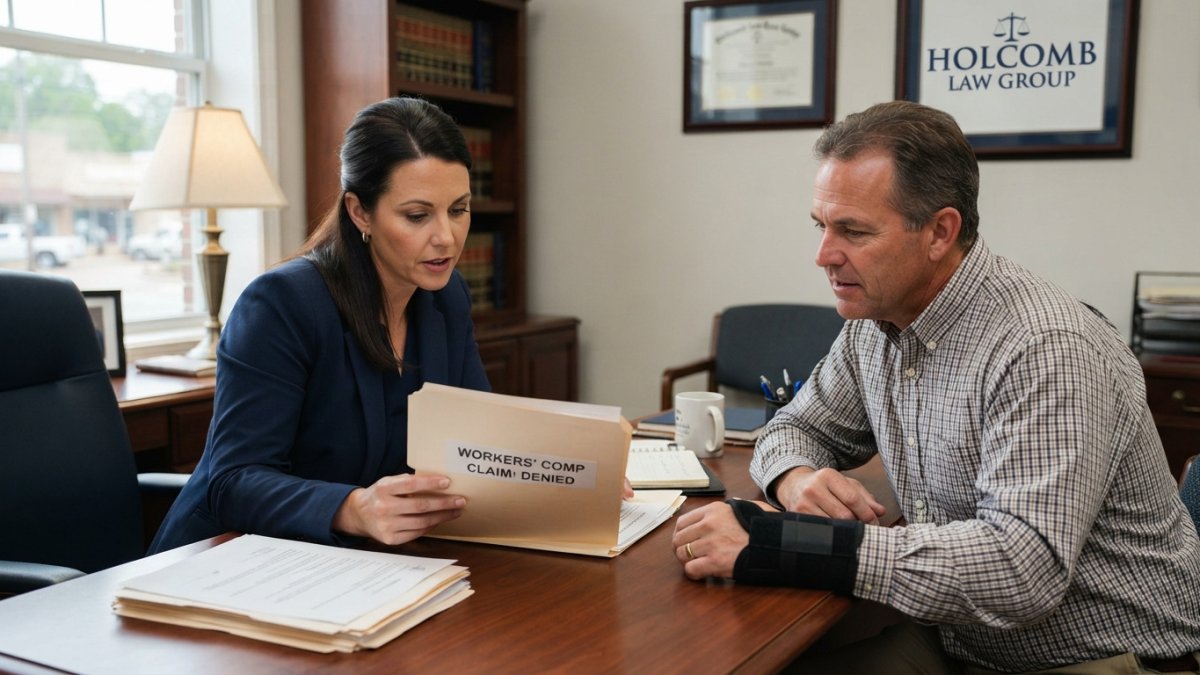
A denial letter should state the reason for the decision. Read it closely and note the stated basis, the date, and any deadline for an appeal.

Look for these details:
- The specific reason given for the denial
- The claim number and date of injury
- The deadline to request a hearing or file an appeal
If a denial letter cites a reason you do not understand, write down the exact wording before you respond.
Evidence That Supports a Workers' Compensation Claim
Strong documentation is often what decides a contested claim. Gather records as early as possible.
- Incident or injury reports filed with the employer
- Witness names and written statements
- Medical records and treatment notes from the first visit
Keep copies of everything you send and receive. Dates and records carry weight in a dispute.
How to Appeal a Workers' Compensation Denial
Many workers can challenge a denial, but the process is deadline-driven and state-specific. The steps below are a practical action plan; confirm the exact deadlines and forms with the workers' compensation board or commission in the state where the injury happened. To see what workers' compensation attorneys do from consultation through settlement, review that page before you decide on next steps.
A Step-by-Step Denial Response Checklist
- Log the denial. Note the date on the denial letter, the claim number, the stated reason, and every deadline printed on the notice. Calendar the appeal deadline the same day.
- Request the claim file. Ask the carrier or claims administrator for the records it relied on. Many states give workers a right to review the claim file, and seeing the basis for the denial often reveals whether the carrier misunderstood the facts.
- Gather evidence. Pull together the incident report, witness names, medical records from the first visit, work schedules, and any messages about the injury. Keep originals and send copies.
- Get a medical opinion. A treating physician's note connecting the injury to work duties is often the strongest piece of evidence in a disputed claim. Ask the doctor to address the specific reason given in the denial.
- File the appeal or hearing request. Use the form and filing method the state requires, some boards accept online filings, others require mail or in-person filing. Keep proof of filing.
- Prepare for the hearing. Organize documents by date, prepare a short written timeline, and line up witnesses. Many hearings are informal, but the record you build matters.
- Consider mediation or settlement. Some states require or encourage mediation before a hearing. A settlement can resolve the dispute faster, but review the terms carefully before signing.
What a Denial Notice Does and Does Not Mean
A denial notice is a decision on the claim as filed, and it is not a final ruling on whether the injury is work-related, even when the carrier chooses to deny workers comp benefits outright. It also does not always close the door on medical treatment: in many states, a worker can request a review of a specific treatment denial without appealing the whole claim. Understanding the specific procedural nuances of these notifications is essential when you prepare to handle insurance claim denial effectively.
Evidence That Decides Appeals
Strong documentation is often what decides a contested claim. Gather records as early as possible.
- Incident or injury reports filed with the employer
- Witness names and written statements
- Medical records and treatment notes from the first visit
Keep copies of everything you send and receive. Dates and records carry weight in a dispute, and a consistent timeline is often more persuasive than a single strong document.
Deadlines and State Differences
Appeal deadlines vary widely by state, and the deadline can depend on the type of decision, a full denial, a partial denial, or a medical-treatment dispute may each have its own clock. Missing a deadline can end your right to appeal, so act quickly and confirm the rule with the state board or commission. Mississippi Workers' Compensation Commission
An attorney can explain how the process works in your state and help you build the record before the deadline passes.
Your Protections Against Retaliation and Next Steps in Mississippi and Tennessee
Federal and state law generally protect workers who file a legitimate claim, though the specifics vary by state.
If a denial arrives, these steps help protect your position:
- Keep a written record of every communication
- Do not sign documents you do not understand
- Note the appeal deadline and calendar it
For a clear review of your denial and your options, consider speaking with a qualified workers' compensation attorney. Read our guide on hiring a lawyer for personal injury claims to understand what to look for.
Frequently Asked Questions
Can an employer deny a workers' comp claim if the injury was not reported right away?
An employer or insurer may question a claim when the injury was reported late, but a delay alone does not automatically mean the claim is denied. Filing deadlines and notice requirements are set by state law, and they differ from one state to the next. Check the rules that apply where you work, and report the injury in writing as soon as possible. If a denial arrives on this basis, review the letter for the specific reason given and the deadline to respond. A consultation with a qualified attorney can help you judge whether the delay can be explained.
How do I appeal a denied workers' compensation claim?
Start by reading the denial letter closely to identify the stated reason and any deadline for appealing. Gather medical records, incident reports, witness statements, and any documentation that connects the injury to your job. Follow the appeal procedure set by your state's workers' compensation board, which typically requires a written request filed within a specific time period. Keep copies of everything you send and receive. Because procedures and deadlines vary by state, verify the requirements with the official workers' compensation agency in your state or speak with an attorney.
What should be included in evidence supporting a workers' compensation claim?
Useful evidence often includes the injury report, medical records and treatment notes that describe the injury and its cause, witness statements from coworkers or supervisors, photographs of the work area, and records showing your job duties at the time. Written communications with your employer and insurer are also important. Keep originals and copies organized by date. Evidence that connects the injury to your work activities is especially important when the employer or insurer disputes causation.
Can a workers' compensation claim be denied for an injury that happened outside work?
A claim can be denied when the insurer or employer concludes the injury did not arise out of and in the course of employment. Injuries that occur during a personal activity unrelated to job duties are commonly disputed. Whether an injury is work-related depends on the facts and on the rules of your state. If you receive a denial on these grounds, review the facts of the injury, gather evidence about your duties and location at the time, and consider speaking with an attorney about the appeal.