 how-to
How to Settle Business Disputes Without Litigation
Table of Contents
- Understanding Business Disputes and When to Avoid Court
- How to Negotiate a Business Settlement Directly
- The Business Dispute Mediation Process Explained
- How Long Does Business Dispute Mediation Take
- Arbitration as an Alternative to Court
- Drafting a Business Settlement Agreement
- When to Bring in Legal Counsel
- Frequently Asked Questions
Last Updated: October 17, 2026
Understanding Business Disputes and When to Avoid Court
A business dispute arises when two parties disagree over a contract, payment, performance, or another commercial obligation, and knowing how to settle business disputes efficiently can save time and money.
Litigation is expensive, time-consuming, and public.
Settling business disputes without litigation offers a different path. You maintain control, reach an agreement faster, keep the details private, and preserve the business relationship if you want to work with the other party again.
At Holcomb Law Group, we help clients resolve disputes through negotiation, mediation, and arbitration, methods that keep decisions in your hands and costs manageable. We also handle Business Collections when disputes involve unpaid debts, and Commercial Litigation when court becomes necessary.
How to Negotiate a Business Settlement Directly
Direct negotiation is the first step to settle business disputes. It's the simplest approach and often the fastest.

Open the conversation professionally. A simple email or phone call can start the process. State the problem factually.
Make a reasonable first offer. Don't demand everything.
Document everything. Send follow-up emails summarizing what was discussed and agreed. This creates a record and prevents misunderstandings.
Direct negotiation works best when both parties are reasonable and motivated to settle. If one party refuses to engage or the gap is too wide, mediation is the next logical step.
The Business Dispute Mediation Process Explained
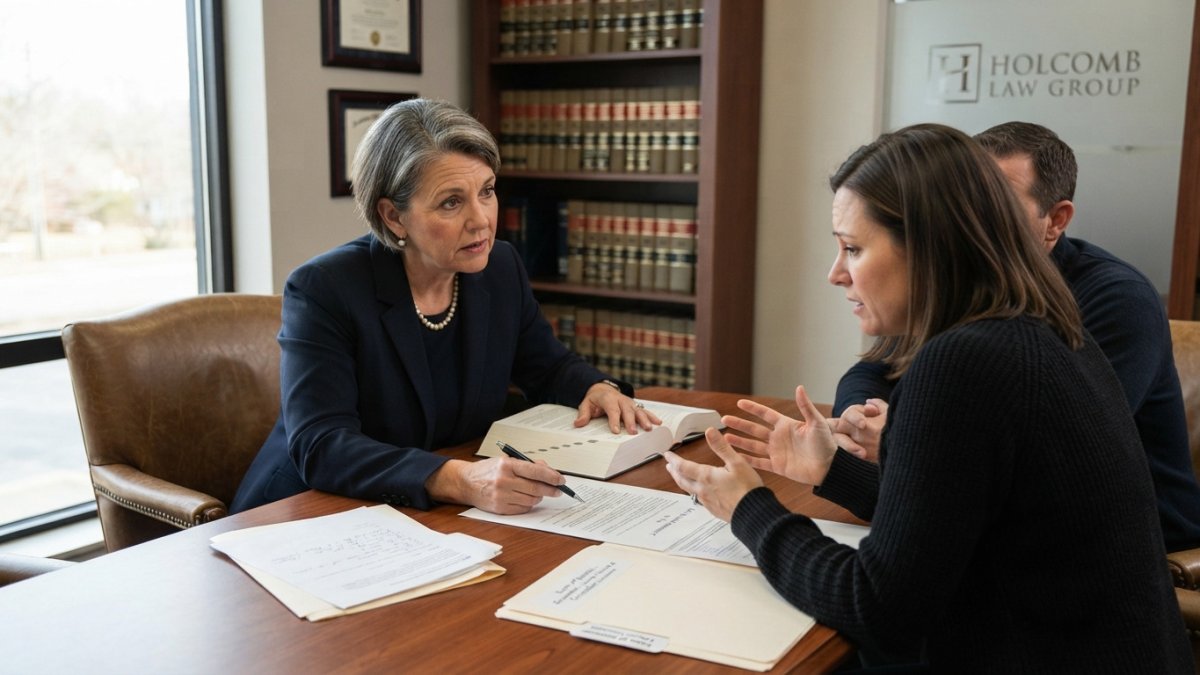
Mediation is a structured process where a neutral third party, the mediator, helps both sides reach an agreement. The mediator doesn't decide the outcome, they facilitate discussion, clarify positions, and propose creative solutions. Mediation is nonbinding, so if you don't reach an agreement you can still pursue arbitration or other remedies.
The Role of the Mediator
The mediator is a neutral professional trained in dispute resolution. They don't take sides or judge who is right; their job is to help both parties communicate and find mutually acceptable solutions.
A good mediator:
- Listens without judgment
- Asks clarifying questions
- Identifies underlying interests (not just stated positions)
- Suggests creative compromises
- Keeps discussions confidential
- Manages emotions and keeps tone professional
The mediator meets with both parties together and separately. In separate sessions, called "caucuses", each party can speak freely without the other present, and the mediator carries messages between rooms.
What to Expect During Sessions
A typical mediation session lasts 2-4 hours.
Joint discussion. Both parties may discuss the dispute directly while the mediator keeps the conversation respectful and focused.
Separate caucuses. The mediator meets privately with each party to discuss concerns, bottom lines, and willingness to compromise.
Problem-solving. The mediator proposes solutions based on what each party revealed in caucuses, and offers are exchanged.
Preparation strengthens your position: bring documents, know your numbers, and understand what you'll accept.
How Long Does Business Dispute Mediation Take
Timelines and costs are the two questions business owners ask first. Here's what drives duration and expense across each process.
Mediation timelines
A straightforward two-party commercial dispute often settles in a single half-day session of roughly 3 to 5 hours. Disputes with multiple issues, several parties, or a wide gap between positions commonly need two or three sessions over several weeks. Because you schedule directly with the mediator and the other party, there is no court calendar to wait on, the first session often occurs within a few weeks, with resolution within 30 to 90 days for most matters.
What stretches a mediation:
- Number of parties. Each additional party adds scheduling complexity and caucus time.
- Documentation volume. Disputes that require the mediator to review extensive records take longer.
- Authority to settle. If a decision-maker is not in the room or reachable, sessions stall.
- Emotional intensity. Long-standing or personal disputes need more caucus time.
Cost drivers by process
Mediators and arbitrators generally bill hourly, and the parties typically split the neutral's fee. Beyond that rate, the real cost differences come from these drivers:
| Cost driver | Negotiation | Mediation | Arbitration |
|---|---|---|---|
| Neutral's fee | None | Hourly, split | Hourly or per-case, split |
| Attorney involvement | Optional | Often limited | Usually higher |
| Discovery | None | None | Limited but real |
| Scheduling delay | None | Minimal | Moderate |
| Filing/admin fees | None | Rare | Often required by the forum |
Rather than quote a single figure, ask each provider for their hourly rate, estimated session count, and any administrative fees before you commit. A short written engagement letter should spell out the fee structure, cancellation terms, and who pays what.
Arbitration timelines
Arbitration is usually faster than court but slower than mediation. A single-arbitrator commercial matter may conclude in several months; a three-arbitrator panel or complex multi-issue case can run considerably longer. The main time drivers are the forum's rules, the scope of permitted discovery, the number of arbitrators, and how quickly the parties exchange documents.
Why mediation is usually the fastest path
Mediation compresses the timeline because there is no discovery, no motion practice, and no waiting for a judge's schedule, you and the other party control the pace. The trade-off: mediation only produces a result if both sides agree, which is why many parties mediate first and hold arbitration or litigation in reserve.
Arbitration as an Alternative to Court
Arbitration is a formal dispute resolution process in which a neutral arbitrator hears both sides and issues a binding decision called an award. It sits between mediation and litigation: more structured than mediation, generally faster and more private than court.
How arbitration works
Both parties present evidence and arguments to the arbitrator, who reviews the record and issues a written, binding award. Arbitration is often faster than court because discovery is limited and there is no jury trial. Proceedings and awards are generally private, though confidentiality depends on the forum's rules and the parties' agreement.
When arbitration is already required
Many business contracts include an arbitration clause requiring disputes to be resolved through arbitration rather than litigation. Before you assume you can choose your process, read the dispute-resolution clause in the underlying contract. It may specify:
- The forum. A named arbitration provider and its rules.
- The seat or location. Where the arbitration will be held.
- The number of arbitrators. One arbitrator is common; larger disputes may use a panel of three.
- Cost allocation. Who pays the arbitrator's fees and administrative costs.
- Governing law. Which state's law applies.
If a valid arbitration clause exists, a court will generally enforce it and compel arbitration. That makes reviewing the clause the first step in any dispute involving a signed contract.
Choosing a process: a practical decision framework
Use these questions to pick between negotiation, mediation, and arbitration:
- Is there a contract clause requiring arbitration? If yes, arbitration is likely your path unless both parties agree otherwise.
- Do you want to preserve the relationship? Mediation is usually the better fit for ongoing commercial relationships; arbitration is more adversarial.
- How urgent is resolution? Negotiation and mediation are fastest. Arbitration is faster than court but slower than mediation.
- How important is confidentiality? All three are more private than court, but arbitration awards can become public in some circumstances, so confirm the forum's rules.
- Do you need a binding, enforceable outcome? Arbitration produces a binding award; mediation only produces an agreement if both sides sign.
- Is the amount in dispute worth the process cost? For smaller claims, direct negotiation is often the most economical route.
Enforceability of arbitration awards
An arbitration award is generally enforceable in court, and the grounds for overturning one are narrow. That finality is a benefit if you win and a risk if you lose, so get the process right the first time: choose a qualified arbitrator, follow the forum's rules, and present your evidence thoroughly.
Risks and limits of arbitration
Arbitration is not right for every dispute. Consider these trade-offs:
- Limited appeal rights. An unfavorable award is difficult to overturn.
- Cost can escalate. A three-arbitrator panel and extensive motion practice can raise costs significantly.
- Power imbalances. A party with fewer resources may be at a disadvantage in a formal process.
- Confidentiality is not guaranteed. Some awards and filings become public.
- Unsuitable for precedent-setting or public disputes. If you need a public ruling or a legal precedent, litigation may be the better fit.
Arbitration vs. mediation
Mediation is collaborative: both parties work together and the mediator does not decide. Arbitration is adversarial: you present your case and the arbitrator decides. Choose mediation to preserve the relationship and keep control of the outcome; choose arbitration for a definitive, binding result that doesn't require the other party's agreement.
Drafting a Business Settlement Agreement
Once you reach agreement, through negotiation, mediation, or arbitration, you need a written settlement agreement that locks in the terms and prevents future disputes.
Essential elements of a settlement agreement:
- Parties. Name both parties clearly.
- Recitals. Briefly describe the dispute.
- Settlement terms. State exactly what each party will do. If payment is involved, specify the amount, due date, and method of payment.
- Release clause. Each party agrees not to sue the other over this dispute. This is critical, it prevents the other party from filing suit later.
- Confidentiality. Often, parties agree to keep settlement terms private. This prevents the other party from using the settlement against you in other disputes.
- Governing law. State which state's law governs the agreement.
- Signatures. Both parties sign. Ideally, they sign in front of a notary.
Common mistakes to avoid: vague payment terms ("payment soon" instead of "payment by December 15, 2026"), missing release language (the other party sues again over the same dispute), no confidentiality clause, and unclear performance obligations.
A well-drafted settlement agreement ends the dispute cleanly and protects both parties.
When to Bring in Legal Counsel
You don't need a lawyer to negotiate or mediate. But legal counsel adds value at key moments.
Bring in an attorney:
- Before signing any settlement agreement
- If the other party has an attorney
- If the dispute involves a contract with complex terms
- If the amount in dispute is significant
- If you're unsure about your legal rights
- If the other party makes threats or refuses to negotiate reasonably
An attorney reviews the settlement agreement to protect your interests, spots problems you might miss, and explains your rights and options.
At Holcomb Law Group, we help clients through every step of dispute resolution, from initial negotiation through settlement drafting.
Settling a business dispute without litigation saves time, money, and stress.
Frequently Asked Questions
What is the first step in resolving a business dispute?
Open communication with the other party is the foundation. Clearly document the issue, the impact, and what you're seeking to resolve. Many disputes settle through direct negotiation when both parties understand each other's position and priorities. If direct talks stall, consider bringing in a neutral mediator or consulting with legal counsel to evaluate whether mediation, arbitration, or litigation is the best path forward for your specific situation.
How does the business dispute mediation process differ from arbitration?
Mediation uses a neutral third party to help both sides communicate and find common ground, but the mediator cannot impose a decision. Arbitration involves a neutral arbitrator who listens to evidence and makes a binding decision, similar to a judge but outside the court system. Mediation is typically less formal, more flexible, and preserves relationships better. Arbitration is faster and more conclusive but removes some control from the parties. Both avoid court delays and reduce legal fees compared to litigation.
What should a business settlement agreement include?
A binding settlement agreement should clearly state what each party agrees to do or not do, any payments or compensation involved, a timeline for performance, confidentiality terms (if applicable), and language confirming that both parties release each other from further claims related to the dispute. Include specifics on how disputes about the settlement itself will be handled. Have legal counsel review the agreement before signing to ensure all terms are enforceable and protect your interests.
How long does business dispute mediation take?
Most mediations resolve within one to three sessions, typically spanning a few weeks to a few months depending on complexity and the parties' availability. Some disputes settle in a single day session; others require more time if parties need to gather documents, consult advisors, or work through multiple points of disagreement. Mediation is generally much faster than litigation, which can take years. The timeline depends on the dispute's complexity, the parties' willingness to compromise, and how quickly they can make decisions.